
How to split equity between cofounders, advisors, and angel investors fairly
Equity feels easy to settle early. A quick conversation, a round number, a handshake. Then the company gets traction and the split no longer matches who is actually doing the work.
What is a fair equity split between cofounders?
A fair split follows what each person actually contributes, not who argued best or joined first. Most founders guess on equity splits and compensation. They negotiate percentages based on who argued best, who joined first, or who had cash on hand. Advisors get a standard grant whether they show up every week or never.
When the company grows, people feel undervalued. Resentment builds. Good partners leave, and some partnerships end in expensive business divorces. Investors notice when a cap table does not reflect real contribution.
What founders actually need
- A fair way to recognize every kind of contribution, not just cash or job title
- A process that replaces arguing over percentages with evidence
- Clear terms that hold up as roles change
- Documentation that prevents disputes later
How ExecutionDNA Allocation solves it
ExecutionDNA Allocation is a PulsePoint Path program that determines fair equity and compensation for cofounders, operators, advisory board members, and strategic partners.
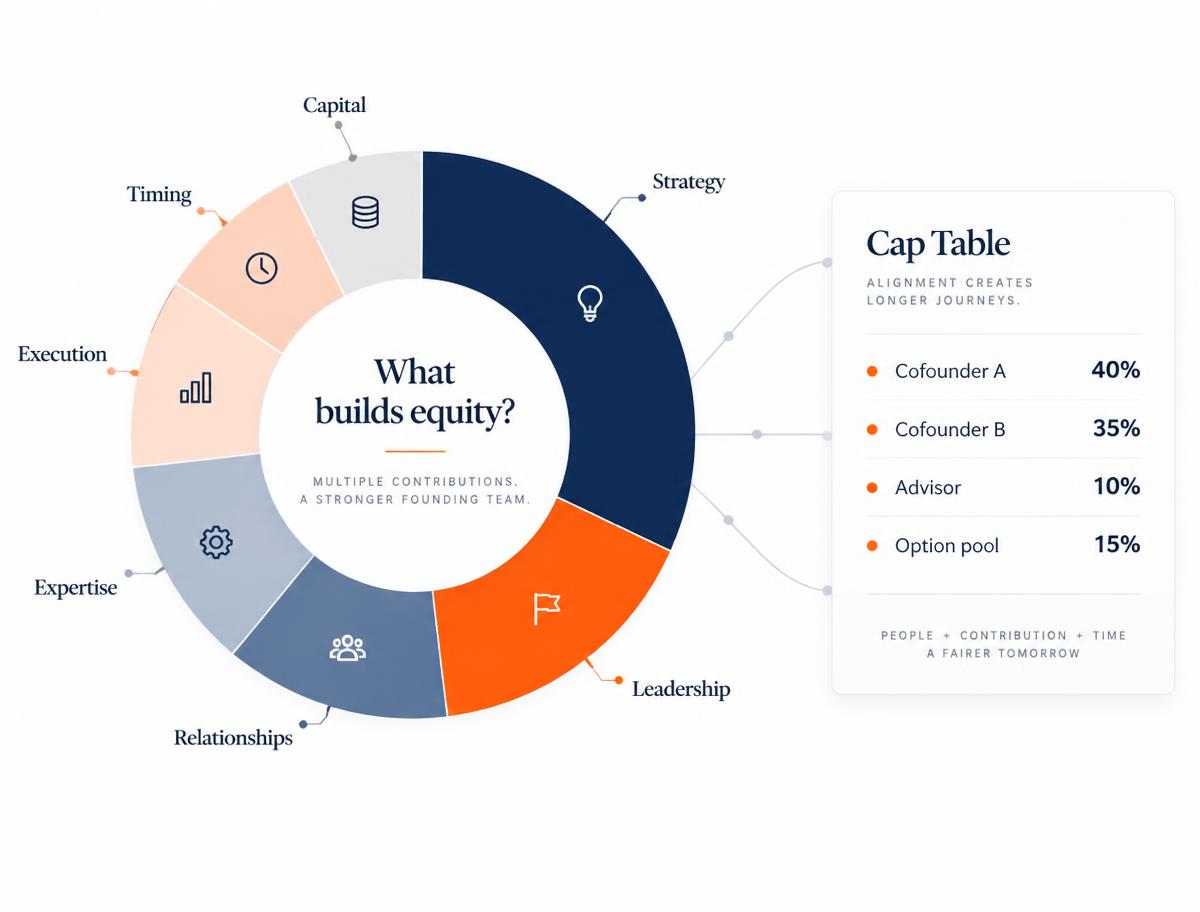
The idea behind it is simple: contribution, not negotiation, should drive ownership. We look at what each person actually brings across the business. That includes strategy, leadership, relationships, expertise, execution, timing, and capital.
People document what they really do and submit evidence of what they bring. Nobody has to score themselves or argue for their own value. If someone wears two hats, both roles are counted. Money put at risk is treated differently from money lent, so loans do not quietly dilute everyone else.
Ownership is only one option. We also look at salary, deferred salary, revenue share, bonus and performance structures, and hybrid founder partnership models, so each person's incentives line up with the company's success.

How much equity should advisors and cofounders get?
Each person should get equity that matches what they actually bring. Cofounder equity reflects the full weight of what each cofounder builds and carries across the business, alongside any capital they put at risk. Advisory board equity reflects the specific, active work an advisor commits to, such as opening doors, guiding strategy, or lending clinical or operating expertise. A title alone does not earn equity.
Each person receives a private report with their recommended allocation. Nobody sees anyone else's inputs. The founder sees the full team picture. If a number feels off, we talk it through. It is a starting point for alignment, not a courtroom verdict.
How much equity should an angel investor who also advises get?
More than an angel who only invests. An angel investor who only writes a check contributes capital. That capital matters and it is recognized.
An angel investor who also takes an advisory seat contributes capital plus active work: introductions, strategic guidance, hours in the room, and expertise the company would otherwise have to pay for. Both kinds of contribution are counted. Because they bring more to the company, they earn more equity than someone who brings capital alone.
That is the principle behind ExecutionDNA Allocation. Contribution, meaning capital plus active advisory work, earns more than capital by itself.
Who it is for
This program is built for founders and CEOs of healthcare, wellness, and dental companies. You have early revenue, ideally $1M or more, and the company is still founder-led.
It fits best when you are bringing on cofounders, forming or expanding an advisory board, adding strategic partners, or welcoming angel investors who want to take an active role.

What you get
-
An evidence-based review of each partner's contribution and capital
-
Recommended structures across equity, salary, deferred salary, revenue share, and bonus models
-
A private allocation report for each partner
-
A consolidated team view for the founder
-
A group alignment conversation
-
Documentation to help prevent future disputes
Frequently asked questions
Should we pay advisors and partners in equity, revenue share, or cash?
It depends on the role and the work. Ownership is only one option. We also look at salary, deferred salary, revenue share, bonus and performance structures, and hybrid founder partnership models, so each person's incentives line up with the company's success.
Do partners score their own contribution?
No. Partners describe what they do and provide evidence. The evaluation is done independently so nobody has to argue for their own value.
Does a loan to the company earn equity?
No. Money put at risk is treated as an investment. A loan is repaid and does not dilute the other partners.
Can other partners see what I submitted?
No. Each partner sees only their own report.
Is the result final?
It is a well-supported starting point. If a number feels off, the team talks it through.
Where can I meet advisors and investors who work this way?
See upcoming Health Board Advisors events, or read more on the PulsePoint Path blog.
Take the next step
Settle ownership on what people actually contribute, before it becomes a fight.
If your company already has revenue, book time with Sabrina to talk through where you are and whether this program fits.
Still sorting out which program you need? Start a conversation with our team and we will point you in the right direction.

Ready to scale efficiently and break through barriers?
Contact PulsePoint Path for Personalized Guidance and Support!

What's Your Impact Quotient?


